
 English
Views: 196 Author: Site Editor Publish Time: 2025-08-25 Origin: Site


High Modulus Polyethylene (HMPE), also commonly referred to as UHMWPE (Ultra-High Molecular Weight Polyethylene), is a revolutionary synthetic fiber material that has reshaped industries requiring extreme strength, lightweight properties, and resistance to environmental stress. While steel has long been the benchmark for strength, the development of HMPE has challenged this perception. Surprisingly, pound for pound, HMPE fibers are often described as being stronger than steel. But why is this the case? To understand this phenomenon, we must first explore the fundamental structure of HMPE, its unique molecular arrangement, and the physical properties that grant it superiority in tensile performance.
HMPE fibers are created through a highly specialized gel-spinning process, which aligns the molecular chains in an exceptionally orderly fashion. This process ensures that the fibers are not only strong but also resistant to abrasion, moisture, and ultraviolet light. In practical applications such as fishing lines, mooring ropes, cut-resistant gloves, aerospace components, and military equipment, HMPE has outperformed traditional materials including steel wire. The contrast between the seemingly delicate, lightweight strands of HMPE and the rigid, dense image of steel raises an essential question: what gives HMPE this extraordinary advantage?
The key to understanding why HMPE is stronger than steel lies in the science of polymer chemistry. HMPE fibers are composed of long chains of polyethylene molecules with extremely high molecular weight. These chains are highly linear and exhibit minimal branching, which allows for greater intermolecular bonding forces. This structural alignment creates strong van der Waals interactions, leading to remarkable tensile strength.
Steel, on the other hand, is an alloy composed primarily of iron and carbon, reinforced by crystalline structures. While steel’s metallic bonding gives it rigidity and compressive strength, it also introduces brittleness under certain stress conditions. HMPE avoids this by being both flexible and durable, allowing it to endure repetitive stress cycles without permanent deformation.
Another crucial factor is density. Steel is dense and heavy, which makes strength comparisons difficult unless normalized for weight. When engineers compare tensile strength-to-weight ratio, HMPE surpasses steel. In fact, HMPE fibers can be up to 15 times stronger than steel on an equal-weight basis. This means that a relatively thin HMPE line can outperform a steel wire rope several times thicker, while also being significantly lighter and easier to handle.
Furthermore, the manufacturing process of HMPE enhances molecular orientation, which results in extremely high crystallinity. This molecular order contributes to its excellent resistance against creep (the tendency of a material to deform permanently under long-term stress), giving HMPE a durability advantage in demanding applications.
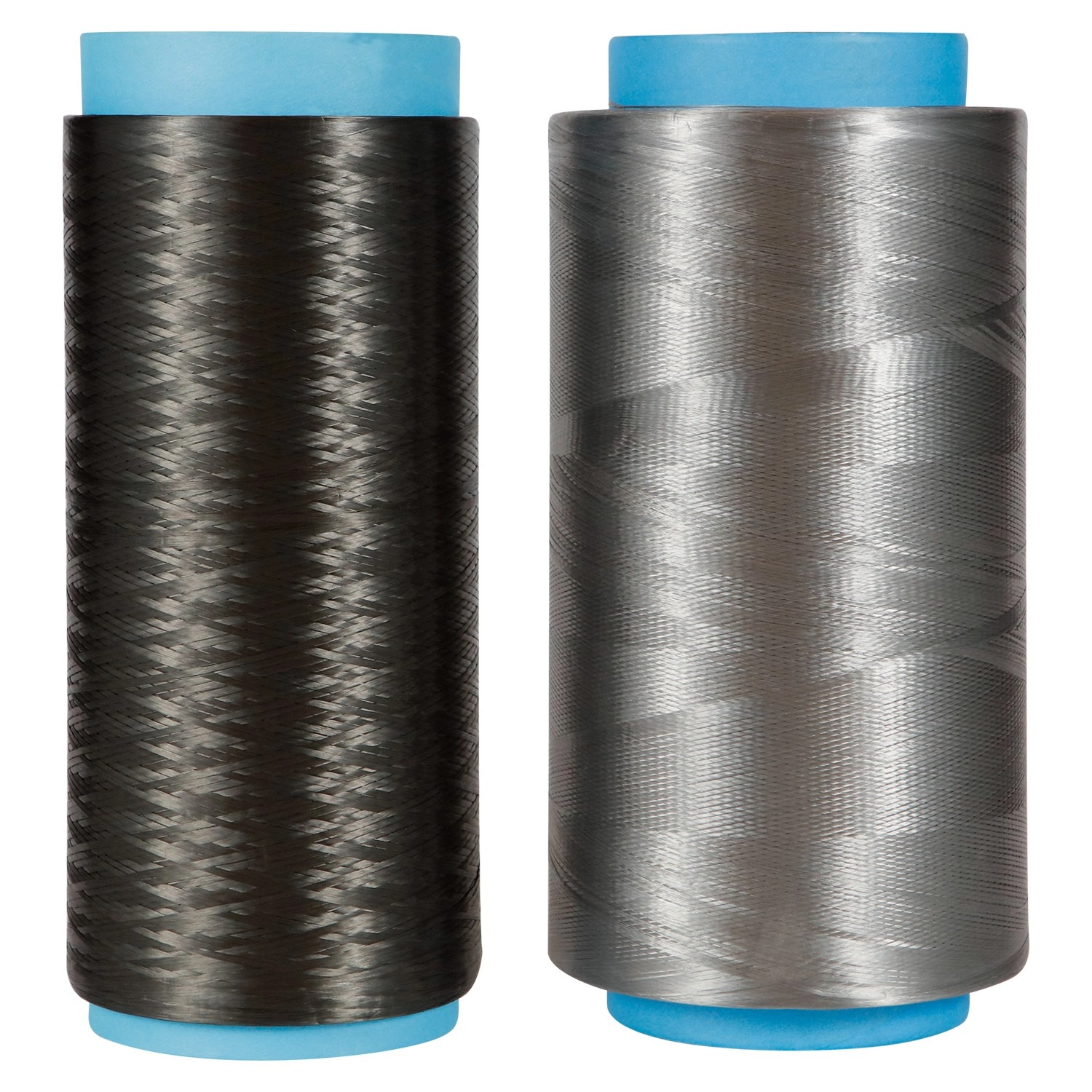
To visualize the advantages, the following table provides a clear comparison between HMPE fibers and traditional steel in terms of key performance indicators:
| Property | HMPE Fiber | Steel |
|---|---|---|
| Tensile Strength-to-Weight Ratio | Up to 15 times higher than steel | High, but lower per unit weight |
| Density | ~0.97 g/cm³ (lighter than water) | ~7.8 g/cm³ (very heavy) |
| Flexibility | Extremely flexible, knot-retentive | Rigid, prone to kinking |
| Corrosion Resistance | Immune to rust and saltwater | Prone to corrosion unless treated |
| Abrasion Resistance | Excellent with proper coating | Moderate, can wear under friction |
| UV Resistance | High (with stabilizers added) | Degrades without protective coating |
| Floatation | Floats on water | Always sinks due to density |
This table demonstrates how HMPE achieves a balance of lightweight, durability, and strength that steel cannot replicate in certain environments, especially those where weight reduction and corrosion resistance are critical.
The question of why HMPE is stronger than steel is not just a scientific curiosity; it has profound practical implications. One of the most common uses of HMPE is in the fishing industry, where braided fishing lines made from HMPE offer unmatched strength while remaining thin and manageable. Anglers benefit from reduced line diameter, allowing for longer casting distances and higher line capacity on reels. Unlike steel wires, HMPE fishing lines do not corrode in saltwater and remain flexible after repeated use.
In maritime industries, HMPE ropes have replaced heavy steel cables in mooring and towing operations. Ships equipped with HMPE ropes experience safer handling, as these ropes are lightweight enough for crew members to manage without heavy machinery. Their ability to float also prevents entanglement with propellers—a risk often associated with steel cables.
Military and defense sectors also value HMPE for its ballistic-resistant applications. When woven into fabrics, HMPE can stop projectiles more effectively than steel armor plates of equivalent weight, offering soldiers greater mobility without sacrificing protection. Similarly, in aerospace engineering, HMPE components reduce overall weight while maintaining strength—an essential requirement for fuel efficiency and payload optimization.
Each of these applications highlights the unique properties that make HMPE not only stronger than steel but also more versatile in real-world performance.
A common misconception arises when people hear that HMPE is stronger than steel: they imagine absolute strength, like the force needed to break a cable in two. However, the key lies in specific strength, which is the strength of a material relative to its density. Steel indeed has immense absolute strength, but its high density means that to achieve similar strength levels, much more weight must be carried.
Consider this analogy: if you needed to build a bridge using steel cables, the structure would need to support not only the load but also the heavy weight of the cables themselves. With HMPE, the cables would weigh a fraction of that, freeing up capacity for the actual load. This weight advantage explains why HMPE is often used in climbing ropes, rescue equipment, and high-performance sports gear.
The weight-to-strength advantage of HMPE becomes especially critical in industries like aviation and shipping, where reducing unnecessary mass translates directly to fuel savings and enhanced safety. Steel cannot compete in these scenarios because its density inherently limits its efficiency.
Not in every aspect. HMPE is stronger than steel by weight, particularly in tensile strength. However, steel retains advantages in compressive strength and thermal resistance.
With proper stabilizers, HMPE shows excellent resistance to UV rays and environmental factors. Still, prolonged exposure without protection can reduce performance.
Not entirely. Steel remains essential in structures requiring rigidity, extreme heat resistance, or compressive strength. HMPE excels in lightweight tensile applications but is not a universal replacement.
Yes, HMPE fibers have a density lower than water, making them buoyant. This feature is especially useful for marine and rescue applications.
HMPE has excellent abrasion resistance, particularly when coated. However, in extremely rough conditions, steel may still be more durable. Proper application choice is key.
HMPE represents a new frontier in material science, where strength is no longer tied to sheer density. Its superiority over steel in tensile strength-to-weight ratio makes it indispensable in industries that value performance, safety, and efficiency. By combining flexibility, corrosion resistance, abrasion endurance, and buoyancy, HMPE demonstrates that lightweight synthetic fibers can outperform traditional metals in numerous applications.
While steel will always have its place in construction, manufacturing, and heavy engineering, the rise of HMPE highlights the importance of innovation in materials science. The question “Why is HMPE stronger than steel?” reveals a deeper truth: strength is not just about force, but about efficiency, adaptability, and intelligent design. As industries continue to evolve, HMPE will remain a cornerstone of high-performance solutions, pushing the limits of what modern engineering can achieve.