
 English
Views: 0 Author: Site Editor Publish Time: 2026-07-20 Origin: Site


Coloring ultra-high molecular weight polyethylene (UHMWPE) remains a persistent industry challenge. Its chemically inert, highly crystalline structure naturally repels traditional textile dyes. You cannot simply soak these synthetic filaments in a standard dye bath and expect lasting results. This inherent resistance forces many manufacturers into relying on surface-level coatings.
Post-dyeing finished ropes often triggers frustrating color rub-off during field use. You also risk compromising critical fiber strength through repeated chemical and thermal exposure. These secondary processes create severe manufacturing bottlenecks. Lead times stretch as production lines halt for outsourced dyeing phases. Customers end up receiving faded, weakened rigging equipment.
You can eliminate these flaws by transitioning to solution-dyed methods at the extrusion stage. Utilizing pre-dyed UHMWPE fiber establishes a new standard for high-performance marine, tactical, and industrial applications. This proactive approach shifts color integration directly into the fiber manufacturing process, guaranteeing both aesthetic longevity and maximum tensile performance.
To understand why surface dyeing fails, you must examine the molecular architecture of High-Modulus Polyethylene (HMPE). The polymer consists of extremely long chains of polyethylene. These chains align perfectly parallel to one another. This dense alignment creates a highly crystalline structure. The resulting material is non-polar and incredibly hydrophobic. Water simply rolls off its surface. Traditional dyes rely on water to carry pigments into textile fibers. Because HMPE repels moisture, conventional dye molecules cannot penetrate the fiber core.
Manufacturers often attempt to bypass this chemistry through aggressive post-dyeing methods. They typically use heavy polyurethane coatings or high-heat disperse dyeing. These techniques only coat the extreme outer layer of the finished rope. The pigment merely sits on the surface. It forms a fragile mechanical bond rather than a strong chemical bond. As soon as the rope flexes, bends, or rubs against a surface, this outer coating begins to flake away.
This surface-level reality introduces significant commercial liabilities. In marine environments, flaking polyurethane coatings leach microplastics and chemical pigments directly into the water. Regulatory bodies increasingly penalize operations causing such pollution. Furthermore, safety-critical rigging heavily relies on color-coding. Visual colors dictate specific load limits and safe working capacities. When a post-dyed red lifting sling quickly fades to white, operators lose their visual safety indicator. This degradation compromises workplace safety and forces premature equipment replacement.
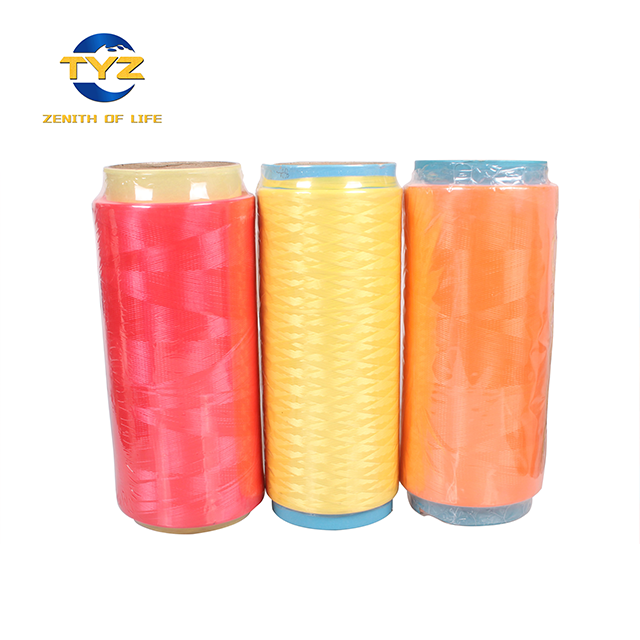
The rope production industry essentially utilizes two distinct workflows for colored products. Understanding these pathways helps procurement teams make better material sourcing decisions.
This traditional method treats color as an afterthought. The workflow proceeds sequentially:
This staggered approach fragments the supply chain. It forces braiders to manage multiple processing stages, increasing labor and utility expenditures.
Dope dyeing fundamentally changes how color enters the product. Pigments blend directly into the polymer matrix before the material ever becomes a solid fiber. The process happens during gel-spinning extrusion. Engineers mix specialized color masterbatches into the liquid polyethylene solution. As the spinnerets extrude the liquid into solid filaments, the pigment locks permanently inside the molecular structure.
By specifying Colored UHMWPE/HMPE Fiber at the procurement stage, you dramatically simplify production. You shift the entire technical burden of color fastness away from the rope braider. The fiber manufacturer assumes responsibility for the chemical formulation. Braiders simply receive pre-colored spools, load them onto their carriers, and braid the final product in one uninterrupted step.
Heat acts as the primary enemy of UHMWPE. The polymer boasts incredible tensile strength, but it possesses a relatively low melting point around 144°C. Even moderate thermal exposure negatively impacts its mechanical properties. Post-dyeing processes routinely require elevated temperatures to force pigments onto the fiber surface. These heated dye baths and drying ovens can alter the fiber's carefully engineered draw ratio.
Prolonged heat exposure induces thermal creep. The molecular chains begin to relax and slip. This invisible structural shift causes up to a 5-15% loss in overall tensile strength. A rope designed to hold 10,000 kilograms might safely hold only 8,500 kilograms after post-dyeing. Engineers must then over-engineer their products, using thicker, heavier ropes to compensate for the anticipated strength loss.
Because the pigment integrates before fiber drawing, dope-dyed products avoid this thermal degradation entirely. The structural integrity remains pristine. The polymer chains align perfectly around the pigment particles during the initial cooling phase. You never subject the final filament to secondary heat shocks. Consequently, the material retains its maximum theoretical strength.
Solution-dyed pigments deliver deep, core-to-surface color saturation. Unlike coated ropes, dope-dyed filaments look identical under a microscope whether you examine the core or the outer sheath. This uniform dispersion guarantees absolute color consistency across massive production runs. A spool manufactured in January will perfectly match a spool produced in December.
When engineering systems require UHMWPE fiber for Rope≠t in aquaculture, offshore mooring, or commercial winch lines, UV degradation emerges as a primary failure mode. Direct sunlight violently attacks polymer bonds over time. However, dope-dyed fibers inherently resist this solar damage. The uniformly distributed pigment particles act as microscopic shields. They physically block and absorb ultraviolet radiation before it can degrade the underlying polyethylene chains. Many premium dope-dyed variants also incorporate advanced UV stabilizers directly into the polymer matrix during extrusion.
Abrasion testing further highlights the dope-dyed advantage. In harsh marine environments, winch lines constantly drag against steel fairleads and concrete docks. Abrasive wear strips the outer layers off any rope. When a post-dyed rope suffers abrasion, it quickly exposes the bright white core yarns beneath the coating. The equipment looks prematurely worn and structurally compromised, even if the core remains intact. Conversely, abrasive wear on a dope-dyed rope simply reveals the exact same color underneath. The line maintains its professional appearance and color-coded safety rating throughout its entire operational lifespan.
| Performance Metric | Post-Dyed Rope | Pre-Dyed Fiber (Dope-Dyed) |
|---|---|---|
| Color Saturation | Surface-level only | 100% Core-to-surface |
| UV Resistance | Low to Moderate | Exceptionally High |
| Abrasion Appearance | Exposes white core yarns | Maintains solid color |
| Tensile Strength Loss | 5% - 15% drop | 0% drop |
Transitioning material strategies requires analyzing concrete implementation realities. Post-dyeing introduces immense logistical friction. If you outsource the dyeing phase, you add weeks to your production timeline. Shipping heavy spools of white rope to a dye house, waiting in their queue, and shipping the wet rope back demands intense coordination. If you run internal coating lines, you face strict environmental compliance issues. Managing toxic wastewater, chemical solvents, and exhaust fumes drains operational resources.
Dope-dyed materials arrive ready for immediate deployment. Warehouse teams unload the colored bobbins, mount them directly onto braiding carriers, and start the machines. You completely bypass the wet processing phase. This streamlined workflow massively impacts market responsiveness. You can fulfill urgent client orders faster because your production cycle contains fewer steps.
However, you must acknowledge the specific procurement mechanics involved. Fiber spinners typically demand higher Minimum Order Quantities (MOQs) for custom dope-dyed colors. Flushing an extrusion line to switch pigment colors takes time and wastes raw polymer. Therefore, manufacturers require larger commitments to justify the setup phase.
You can effectively balance this requirement by calculating a straightforward return on investment. Weigh the inventory holding costs of the higher MOQ against the immediate savings generated elsewhere. You permanently eliminate secondary processing fees, chemical disposal costs, and external logistics. You also accelerate your time-to-market. For most medium-to-large operations, the operational savings heavily outweigh the initial inventory investment.
| Production Stage | Post-Dyeing Timeline | Pre-Dyed Timeline |
|---|---|---|
| Fiber Procurement | 2 Weeks | 3-4 Weeks (Due to MOQs) |
| Rope Braiding | 1 Week | 1 Week |
| Secondary Dye/Coating | 2-3 Weeks | Eliminated (0 Weeks) |
| Drying & Curing | 1 Week | Eliminated (0 Weeks) |
| Total Estimated Time | 6-7 Weeks | 4-5 Weeks |
Choosing the right coloring strategy depends entirely on your production volume and specific application demands. Neither method inherently fails every scenario, but misaligning your choice guarantees wasted resources.
Before committing to a new supplier, audit their technical capabilities thoroughly. Ask these direct questions during the initial consultation:
For durability-critical and high-volume manufacturing, pre-dyed UHMWPE represents a structurally and economically superior choice. Post-dyeing forces you to compromise the very mechanical properties that make HMPE valuable in the first place. Surface coatings fade, flake, and weaken the underlying polymer through repeated thermal shocks.
While upfront material sourcing requires precise forecasting to handle higher minimum orders, the operational payoff is immense. Eliminating the technical debt of secondary rope-dyeing yields a significantly higher quality end-product. You speed up manufacturing cycles, eliminate toxic wet processing, and deliver ropes that maintain their strength and visual integrity in the harshest environments.
Prompt your procurement and engineering teams to shift away from outdated coating methods. Request pre-dyed fiber samples and detailed Technical Data Sheets (TDS) for your next prototyping phase. Testing the material firsthand will immediately validate its superior structural performance.
A: No, high-quality solution dyeing maintains 98-100% of baseline tenacity, whereas post-dyeing heat can degrade strength.
A: Yes. Solution dyeing eliminates toxic wastewater runoff and chemical solvent usage associated with traditional textile dye baths.
A: Yes, but custom masterbatch colors typically require high volume commitments. Standard industrial colors (red, blue, yellow, black) are highly accessible.