
 English

Views: 0 Author: Site Editor Publish Time: 2026-10-27 Origin: Site


Many security managers operate under a dangerous assumption. They mistakenly believe thick steel stops everything. Equating "bulletproof" with "bomb-proof" presents a critical security vulnerability for field operations. Decision-makers often assume a high-level ballistic rating automatically guarantees survivability against explosive threats. The reality looks vastly different. Ballistic and blast threats act on a vehicle using fundamentally different physical mechanics. Mitigating one danger does not ensure protection against the other.
High-velocity projectiles demand entirely different material responses compared to underbelly landmines. Many fleet buyers invest heavily in stopping rifle fire. However, they leave underbellies completely exposed to improvised devices. This oversight creates severe risks during tactical deployments.
This article clarifies these structural differences. We explore global testing standards and essential operational trade-offs. You will learn how to balance payload weight against tactical mobility. We provide a concrete framework for specifying the exact Vehicle Armor profile you need. By understanding these distinctions, teams can safeguard personnel effectively across any high-risk environment.
Mechanics Differ: Ballistic armor stops focused kinetic energy (projectiles), while blast armor mitigates multidirectional overpressure, fragmentation, and structural lift.
Independent Standards: A vehicle certified to CEN B6/B7 (ballistic) is not inherently certified to STANAG or VPAM ERV standards (blast) without specific underbelly and structural engineering.
Weight vs. Mobility Trade-offs: Adding comprehensive blast protection exponentially increases gross vehicle weight (GVW), requiring aggressive chassis and suspension modifications.
Layered Defense: Effective security profiles rely on hybrid armoring, combining opaque/transparent ballistics with V-hulls, floor armoring, and supplementary tools like an explosion-proof blanket.
Understanding threat mechanics forms the foundation of effective security engineering. Threats behave according to strict physical laws. You must counter them using specific structural designs.
Ballistic threats focus massive energy into a tiny physical point. Typical scenarios involve handgun rounds, high-velocity rifle fire, or armor-piercing projectiles. These weapons test the sheer structural strength of outer material shells.
The primary mechanism of failure involves penetration of the cabin envelope. If a bullet defeats the armor layer, occupants face immediate lethal consequences. Secondary failure occurs through internal spalling. Lethal metal fragments break off the inside of the armor plate upon impact. These invisible fragments strike occupants even if the bullet itself stops.
Explosive threats behave more like aggressive fluid dynamics. They focus on Improvised Explosive Devices (IEDs), DM51 hand grenades, and anti-personnel landmines. Unlike straight-line bullets, explosions unleash multidirectional shockwaves.
The mechanism of failure looks entirely different here. Blasts cause catastrophic structural lift. A massive explosion easily flips heavy trucks into the air. Furthermore, massive overpressure waves bypass armor. This pressure ruptures internal organs and eardrums instantly. Secondary fragmentation throws road debris, rock, and vehicle parts violently into the chassis.
Fleet managers must regularly assess their primary operational theater. Do you face targeted urban assassinations? This suggests a high ballistic risk requiring reinforced glass and door panels. Does your route involve asymmetric warfare zones or terrorism hotspots? This environment demands high blast risk mitigation strategies.
Not all armor stops the same threats. Industry standards provide necessary benchmarks for evaluating material reliability. You must understand these frameworks before making procurement decisions.
Various international bodies govern ballistic testing. They measure how well materials resist specific bullet calibers and velocities.
CEN 1063: A European standard commonly used globally. Levels B4 through B7 are prevalent. B6 stops standard 7.62x51mm rifle rounds. B7 stops armor-piercing variants.
VPAM: A highly credible civilian and tactical standard. Ratings scale from VR4 to VR10. VPAM evaluates the entire vehicle structure rather than just flat material samples.
NIJ: The National Institute of Justice standard used frequently in North America. It classifies threats from Level IIA up to Level IV.
Standard Category | Testing Authority | Primary Application |
|---|---|---|
CEN 1063 (B4-B7) | European Committee for Standardization | General civilian and diplomatic transit |
VPAM (VR4-VR10) | Association of Test Laboratories for Bullet Resistant Materials | High-end civilian and structural vehicle testing |
NIJ (Levels IIA-IV) | National Institute of Justice (USA) | Law enforcement and personal body armor cross-over |
Engineers utilize two primary categories of ballistic materials. Transparent armor consists of ballistic glass laminates and polycarbonate layers. These laminates absorb kinetic shocks and catch bullets safely. Opaque armor protects the vehicle body. Hardened ballistic steel, Dyneema, and Kevlar composites act like a dense net. They catch high-velocity projectiles effectively.
Standard ballistic panels remain extremely rigid. This rigidity presents a severe vulnerability during explosive events. When subjected to a violent blast wave, standard rigid panels can shear off their mounting points. The shockwave snaps ordinary bolts effortlessly. The armor itself turns into a secondary hazard. It flies through the cabin if not engineered for blast flexibility.
Common Mistake: Buyers often assume a B7-rated steel plate offers protection against floor grenades. This assumption is false. Rigid steel transfers shockwaves directly into occupant seating, causing severe spine injuries.
Surviving an explosive event demands fundamental chassis engineering. Thickening the steel doors offers almost no value against underbelly threats. Engineers must redirect explosive energy away from the cabin.
Simply adding heavy steel plating fails against improvised devices. Flat surfaces absorb the full force of a shockwave. This energy travels directly into the occupant's spine. Engineers must utilize V-shaped hulls instead. These angled bottom plates deflect blast waves outward, dispersing lethal energy safely. Furthermore, vehicles need heavily reinforced floorpans. Energy-absorbing seating detaches the crew from direct chassis impacts. These floating seats utilize shock-absorbing tethers rather than rigid floor bolts.
Blast mitigation utilizes entirely different certification frameworks.
STANAG 4569: A NATO standard defining military and tactical vehicle protection. Levels 1 through 4 dictate survivability against specific explosive masses (e.g., 8kg of TNT under the wheel).
VPAM ERV 2010: Defines Explosive Resistant Vehicles for civilian platforms. It measures the cabin's ability to survive blast overpressure while maintaining structural integrity.
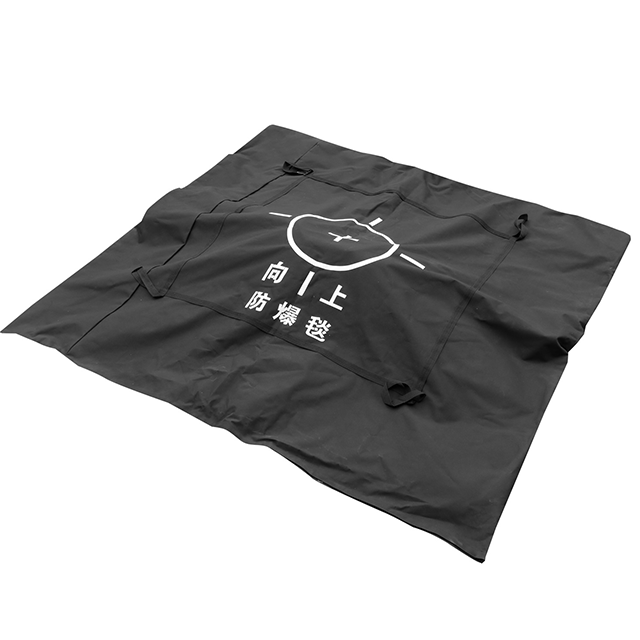
Full V-hulls are sometimes impossible for standard civilian SUVs. In these cases, operators employ localized mitigation tactics. Teams frequently install an explosion-proof blanket over vulnerable chassis zones. They wrap fuel tanks, secondary batteries, and sensitive electronics. This specialized blanket suppresses shrapnel effectively without adding the massive weight of solid steel plating.
Additionally, modern builders spray polyurea coatings inside cabins and wheel wells. These highly elastic polymers contain primary fragmentation. They help maintain cabin integrity under severe metal deformation. The coating stretches instead of shattering.
Every security modification carries a physical cost. You cannot add heavy protection without sacrificing vehicle dynamics. Fleet operators must navigate these engineering trade-offs carefully.
Comprehensive blast protection adds significant weight. Hardened steel floorpans and heavy suspension components consume the vehicle's payload capacity. A standard SUV might carry an extra 2,000 to 4,000 pounds of armor. This exponential increase in gross vehicle weight (GVW) strains the original powertrain severely.
Heavy armor profiles alter the vehicle's center of gravity. V-hulls naturally sit higher off the ground. This elevation increases rollover risk during evasive maneuvers. Furthermore, massive weight strains the braking system. Stopping distances extend significantly. Drivers cannot perform rapid J-turns or escape maneuvers if the vehicle wallows under extreme weight.
Tactical teams face a distinct visual dilemma. Civilian armored vehicles, like SUVs or luxury sedans, aim to remain inconspicuous. They blend into standard traffic to avoid targeting. However, adding heavy blast protection compromises this disguise. High ground clearance for a V-hull destroys the OEM (Original Equipment Manufacturer) appearance. Visible modifications draw unwanted tactical attention.
Procurement officers must remain extremely vigilant. Be wary of vendors promising impossible specifications. Some retro-fitters advertise "Level 7 ballistic and anti-tank blast protection" on standard civilian chassis. This claim defies physics. You cannot mount anti-tank armor on a commercial SUV without documented, extensive drivetrain and suspension overhauls. Standard axles snap under such immense pressure.
Best Practice: Always request documentation for suspension upgrades. True armor builders install specialized shocks, heavy-duty springs, and upgraded braking calipers alongside the armor.
Choosing the correct security profile requires methodical planning. Follow these sequential steps to ensure maximum survivability.
Start by mapping expected threats in your primary operational theater. Security needs vary wildly by region. Distinguish between handguns in urban transit scenarios and IEDs in active conflict zones. Document the specific weapons your teams are most likely to encounter. This threat matrix dictates your baseline engineering requirements.
Vehicles unable to maneuver effectively out of a kill zone possess a fatal flaw. Heavy armor creates a slow, predictable target. You must balance physical protection with mechanical agility. Prioritize "run-flat" tire capabilities and robust engine protection. A moving vehicle survives longer than a heavily armored stationary one. Evasion remains your best defense.
Never trust unverified vendor claims. Ensure vendors provide third-party, independent testing certificates. Look for rigorous agencies like Beschussamt in Germany. Crucially, demand testing certifications for the *entire vehicle*. Testing isolated material samples means nothing. The way parts bolt together determines real-world survivability.
Evaluate manufacturers based on comprehensive capabilities. Look for builders demonstrating proven in-house engineering capabilities. They must possess the tools to perform complex suspension upgrades directly. Avoid third-party retrofitters who merely bolt raw steel into stock vehicles. True survivability requires holistic automotive engineering.
True vehicle security requires specifying exact operational threats. Assuming ballistic resistance guarantees blast survival is a dangerous fallacy. Ballistic armor keeps sharp projectiles out effectively. Blast armor prevents the vehicle from becoming a lethal pressure chamber. They require entirely different engineering disciplines.
We encourage buyers to request a tailored threat assessment today. Demand a thorough structural engineering review before committing to a specific armoring level or manufacturer. Evaluate payload limits, center of gravity, and independent certifications carefully. Make procurement decisions based on tested physics, transparent engineering, and realistic tactical needs rather than empty marketing promises.
A: High-level ballistic glass can resist shrapnel, but without flexible mounting frames designed to absorb shockwaves, the glass can dislodge entirely intact. This failure exposes the cabin directly to lethal overpressure.
A: Rarely. Effective blast protection requires structural engineering at the chassis level. Retrofitting floorpan replacements, V-hulls, and blast-mitigating seats is highly invasive, structurally compromised, and exceptionally costly to perform after the fact.
A: VPAM ERV or CEN B6 level armoring typically includes baseline underbelly protection capable of withstanding two DM51 hand grenades. However, exact testing certifications must always be verified independently with the manufacturer.