
 English

Views: 0 Author: Site Editor Publish Time: 2026-10-20 Origin: Site


When kinetic energy penetrators or shaped charges strike exterior defenses, surviving the initial hit is only the beginning. The resulting shockwave often fractures the interior face of the metal. This dynamic ejects a lethal spray of high-velocity debris directly into the crew cabin. Stopping the primary projectile is merely half the survivability equation. Without adequate interior energy absorption, crew casualties remain highly probable. Critical system failures happen easily even if the exterior plate remains unbreached. You need an effective defense layer behind the metal to survive.
This article outlines the exact physical mechanisms behind spall reduction. We will compare advanced composite solutions like modern polymer weaves against legacy materials. You will also get a practical framework to evaluate interior liner integrations for defense procurement. Read on to discover how to select the right internal protection systems to secure both personnel and fleet mobility.
Secondary fragmentation often causes more interior casualties than primary projectile penetration.
Spall liners function by absorbing residual kinetic energy, slowing fragments, and restricting the spall cone angle.
Material selection dictates vehicle mobility and interior volume; UHMWPE fabric currently leads in weight-to-performance ratios.
Effective procurement requires evaluating solutions against STANAG/MIL-STD compliance, environmental durability, and integration scalability.
Understanding armor failure requires analyzing how different munitions interact with metal plates. High-Explosive Squash Head (HESH) rounds deform against the exterior before detonating. This creates a massive compressive stress wave. The wave travels through the steel, reflects off the inner boundary, and transforms into a tensile wave. Steel is incredibly strong under compression but vulnerable under tension. This tensile stress causes the interior surface to scab and blast inward.
High-Explosive Anti-Tank (HEAT) rounds operate differently. They utilize a shaped explosive charge to project a hyper-velocity jet of superplastic metal. While the jet itself penetrates the hull, it also pushes displaced metal inward. Kinetic impactors, like Armor-Piercing Fin-Stabilized Discarding Sabot (APFSDS) darts, rely on sheer velocity and mass. When they punch through rigid metal, they drag broken bits of the hull along their path. All three mechanisms cause catastrophic internal fragmentation, independent of the primary projectile type.
When the interior wall fractures, it creates a deadly spray of jagged metal called a spall cone. You can visualize this as a shotgun blast originating from the inner wall. The trajectory of these fragments spreads outward in a conical shape. The wider the angle of this cone, the more lethal it becomes. A wide distribution means fragments will strike multiple crew members and various critical electronics. The fragments travel at incredible speeds, often exceeding 1,000 meters per second. At these velocities, even tiny pieces of steel will cause fatal injuries or sever essential wiring harnesses.
You cannot prevent the primary hull from spalling when subjected to overwhelming overmatch forces. Therefore, effective mitigation focuses strictly on post-impact management. Success requires achieving two distinct goals simultaneously. First, the interior layer must capture high-velocity fragments and drop their speed below lethal thresholds. Second, the system must aggressively reduce the overall angle of the spall distribution. Constricting the cone ensures any escaping debris travels in a narrow path. This localized damage protects surrounding crew members. Importantly, you must achieve these goals without adding excessive weight to the chassis. Adding too much mass compromises suspension systems and reduces tactical mobility.
Modern internal protection systems utilize complex layered composites rather than solid rigid plates. When fragmentation strikes these multi-layered structures, the material intentionally begins to separate. We call this process delamination. The kinetic energy of the incoming steel debris breaks the chemical bonds of the resin binding the layers. Breaking these bonds consumes a massive amount of energy.
Once the layers separate, the underlying fibers begin to stretch. This tensile elongation acts like a highly resilient safety net. Individual threads deform and pull against adjacent threads, distributing the impact force across a wider surface area. This rapid deformation converts the lethal kinetic energy into manageable thermal and mechanical energy.
Trapping fragmentation requires a specific structural weave. You want fragments to punch through the first few microscopic layers of the liner. As the jagged metal travels deeper into the composite, it encounters increasing resistance. The tightly woven fibers entangle the sharp edges of the spall. This friction drastically slows the projectile. By the time the fragment reaches the final few layers nearest the crew compartment, it lacks the energy to penetrate completely. The spall remains embedded safely inside the composite block.
Engineers often face confusion regarding the primary role of these interior systems. Spall liners are not standalone exterior protection. They rely entirely on the primary Vehicle Armor to break the main projectile. If you place a spall liner outside a vehicle, a heavy rifle round will easily defeat it. The system acts as a vital backing layer engineered specifically to handle low-mass, high-velocity secondary projectiles. A common mistake in structural design involves removing heavy steel hull thickness and trying to replace it directly with composite liners. You must maintain the primary hull integrity. The interior composite layer exists solely to clean up the mess generated by a hull breach.
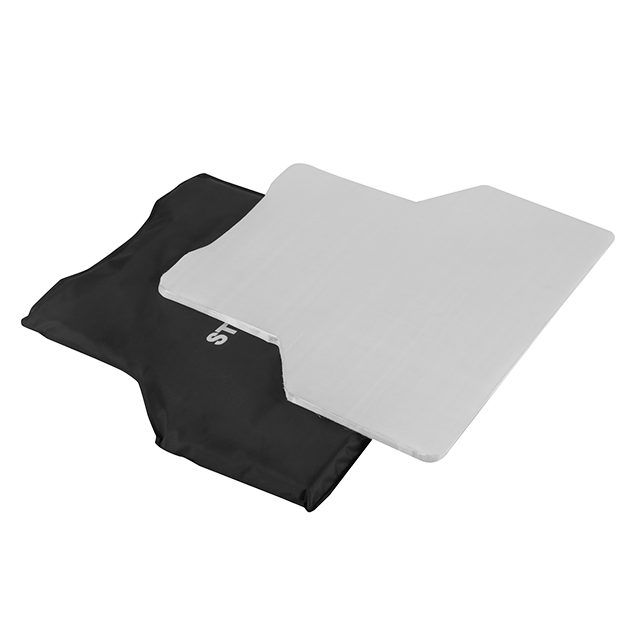
Historically, defense manufacturers relied on fiberglass and aramid fibers to protect vehicle interiors. Fiberglass offered an affordable, rigid backing that successfully caught larger fragments. However, it required immense thickness to stop high-speed spall, adding severe weight penalties. Heavy vehicles suffer from increased fuel consumption, accelerated drivetrain wear, and reduced cross-country mobility.
Aramid fibers, widely recognized by brand names like Kevlar, improved the weight issue significantly. Aramid systems provided excellent thermal resistance and strong ballistic capture capabilities. Yet, aramids carry distinct operational flaws. Over long deployment cycles, they exhibit high susceptibility to moisture absorption. If water breaches the protective seal, the aramid fibers weaken. They also degrade when exposed to prolonged ultraviolet light. For fleet vehicles operating over decades, these environmental vulnerabilities demand costly periodic replacements.
Modern survivability doctrine demands lighter, stronger alternatives. Ultra-High Molecular Weight Polyethylene has emerged as the prevailing standard for interior defense layers. Integrating UHMWPE fabric transforms vehicle capability. Polyethylene fibers boast incredibly high tensile strength while actually floating on water. They are inherently hydrophobic, meaning they completely resist moisture degradation.
When evaluated in ballistic laboratories, polyethylene composites show a superior V50 ballistic limit. The V50 limit represents the exact velocity where a material stops a projectile 50% of the time. Polyethylene routinely scores higher V50 limits than aramid equivalents of the same weight. This exceptional strength-to-weight ratio allows engineers to achieve maximum survivability without burdening the engine or suspension. You preserve fleet mobility while maximizing crew safety.
Material selection always involves balancing areal density against available interior cabin space. Areal density measures the weight of the material per square meter (kg/m²). Lower areal density means a lighter vehicle. The table below illustrates the stark contrasts between legacy and modern composite materials when engineered to meet an identical spall protection baseline.
Material Performance Comparison Summary
Material Type | Relative Areal Density (kg/m²) | Moisture Resistance | Impact on Vehicle Mobility |
|---|---|---|---|
S2-Glass (Fiberglass) | High (~35 - 45 kg/m²) | Excellent | Severe weight penalty; reduces speed. |
Aramid Fibers | Medium (~20 - 25 kg/m²) | Poor (Requires sealing) | Moderate penalty; generally acceptable. |
Polyethylene Composites | Low (~12 - 18 kg/m²) | Excellent (Hydrophobic) | Minimal penalty; preserves mobility. |
Installing internal protective layers into a newly designed chassis is straightforward. Retrofitting existing fleets presents significant engineering challenges. Armored personnel carriers contain incredibly complex internal geometries. You must navigate tightly packed wiring harnesses, hydraulic lines, and air filtration pipes. Every cutout you make in the composite layer creates a potential weak point for fragmentation to slip through.
3D Scanning: Engineers must laser-scan the interior hull to map every bolt, hatch, and contour.
Template Generation: Software algorithms calculate exact cutouts required for periscopes, door hinges, and weapon station rings.
Tolerance Mapping: Teams verify that adding a two-inch thick panel will not prevent heavy steel doors from locking securely.
Maintaining hatch clearances requires meticulous precision. If the liner bulges or sags over time, it can trap a crew inside during an emergency evacuation.
How you attach the liner is just as critical as the material itself. Mechanical fasteners, like heavy steel bolts, offer reliable structural support. However, they introduce a terrifying secondary risk. If a kinetic round strikes the exterior hull directly behind a mounting bolt, the bolt itself becomes a deadly projectile. Improperly engineered mounting hardware routinely causes fragmentation casualties.
Specialized industrial adhesives solve the secondary fragmentation risk. Adhesives bond the composite panel directly to the steel interior. This creates a uniform energy transfer mechanism. The drawback lies in peel strength and environmental degradation. If you operate vehicles in high-heat desert environments, weak adhesives will melt. The panels will peel away from the ceiling and collapse onto the crew. Best practices dictate a hybrid approach: using high-temperature adhesives supplemented by lightweight, non-metallic composite retaining washers.
You cannot ignore the chemical reality of an overmatch scenario. When an anti-tank round pierces a vehicle, it generates extreme flash heat. The interior panels must resist spontaneous ignition. Fire, Smoke, and Toxicity (FST) compliance dictates material survivability.
If a liner catches fire quickly, the crew faces immediate lethal burns. Even more dangerous is toxic smoke. Polymeric composites can release deadly fumes when exposed to high heat. Inside a sealed, over-pressurized cabin, toxic gas incapacitated soldiers faster than the flames. You must ensure your selected liners contain specialized fire-retardant resins. These resins self-extinguish when the immediate heat source disappears and prevent the outgassing of toxic chemicals.
Procuring defensive materials requires ruthless empirical validation. Never accept internal manufacturer testing as the sole proof of efficacy. You must demand third-party ballistic testing data. The NATO standard, STANAG 4569, provides the definitive benchmark for vehicle protection.
STANAG 4569 defines threat levels from Level 1 (light rifle threats) up to Level 6 (heavy cannon and anti-tank mines). While spall liners do not face these threats directly, testing facilities simulate the fragmentation generated by these precise impacts. They measure the mass and velocity of the resulting spall and fire corresponding fragment simulating projectiles (FSPs) at the liner. You should specifically require MIL-STD or STANAG test reports detailing the V50 performance against 20mm and 12.7mm FSPs.
Military hardware operates in brutal conditions for decades. You evaluate materials not just on day one, but on year ten. A 10-15 year lifecycle is standard for fleet procurement.
Thermal Cycling: Materials must survive repeated transitions from freezing arctic nights to blistering desert days without cracking the resin matrix.
Humidity Resistance: Liners must not delaminate or swell when subjected to 95% ambient humidity for prolonged deployments.
Chemical Exposure: Cabins frequently experience diesel fuel spills, hydraulic fluid leaks, and heavy cleaning solvent exposure. The composite surface must remain chemically inert.
A common mistake during procurement is ignoring chemical resistance. A liner that stops shrapnel perfectly but dissolves when exposed to engine oil is a logistical failure.
Shortlisting composite manufacturers requires auditing their industrial capacity. Quality assurance (QA) defines battlefield reliability. You must assess the supplier's batch consistency. If they press one hundred panels, panel number one must perform exactly identical to panel number one hundred.
Inspect their custom molding capabilities. High-end suppliers utilize massive autoclaves to press complex, curved panels that perfectly match vehicle wheel wells and turret rings. Finally, verify secure supply chains. Ensure the supplier sources raw chemical precursors and fibers from allied or stable regions to prevent production halts during geopolitical conflicts.
Advanced spall liners remain non-negotiable for modern armored survivability. They successfully transform catastrophic armor face failures into manageable, localized damage. By understanding how tensile waves shatter interior steel, you can implement effective countermeasures. Transitioning from legacy fiberglass to modern polyethylene composites radically improves protection while preserving crucial vehicle mobility. Correctly addressing FST compliance and mounting techniques ensures the protection system itself does not become a hazard.
Your next steps should begin with a comprehensive fleet audit. Procurement teams must measure existing interior dimensions and calculate permissible weight tolerances. Next, define your required STANAG threat-level parameters based on expected operational theaters. Finally, contact reputable composite manufacturers and demand standardized V50 test data. Integrating the right secondary protection ensures your personnel come home safely after the hardest hits.
A: No. Spall liners are designed strictly to catch secondary fragmentation (spall) originating from the primary vehicle armor, or residual fragments of a defeated projectile. They act as a catcher's mitt for debris, not as the main defensive wall.
A: Yes. While they do not stop the metal jet of a HEAT round or the exterior explosion of HESH, they significantly reduce the lethal stress-wave fragmentation ejected from the interior wall. This localizes the damage and protects the crew.
A: Thickness depends entirely on the material composition and the required threat level. UHMWPE fabric liners can achieve high levels of protection at significantly lower thicknesses and weights compared to traditional fiberglass or steel liners. Precise thickness is calculated using expected fragmentation velocities.