
 English
Views: 0 Author: Site Editor Publish Time: 2026-06-22 Origin: Site


Specifying offshore mooring lines remains a high-stakes decision for marine engineers. You must balance operational safety, strict regulatory compliance, and long-term lifecycle costs. The maritime sector is rapidly accelerating its transition from traditional steel wire to advanced synthetics. Modern operational standards demand faster port turnarounds and enhanced crew protection.
However, direct substitution carries hidden implementation variables. Many fleet managers underestimate the mechanical differences between materials. Failing to address these nuances can compromise vessel security. It can also lead to premature line failure and dangerous deck conditions.
Our goal is to provide technical buyers, fleet managers, and marine engineers with an objective framework. We will help you evaluate HMPE against steel wire rope based on rigorous 2026 operational standards. You will learn how to audit your deck hardware effectively. We will show you how to manage kinetic energy risks and optimize lifecycle budgets safely.
Weight & Handling: HMPE offers a 1-to-1 strength match with steel at approximately 1/7th the weight, drastically reducing crew fatigue and deployment times.
Safety Profile: Synthetics eliminate wire-rope-specific hazards (fishhooks, severe kinetic snap-back) but require strict chafe-management protocols.
Cost of Ownership: While the initial CAPEX for HMPE is higher, OPEX is significantly reduced due to zero lubrication requirements and lower maintenance overhead.
Retrofit Realities: Switching from steel to HMPE requires auditing existing deck hardware (winch drums, fairleads) to prevent premature synthetic fiber degradation.
The maritime industry relied on legacy steel wire for decades. It provided predictable breaking strengths and excellent abrasion resistance. However, steel introduces severe operational bottlenecks in modern offshore environments. It struggles to meet new efficiency demands.
Steel wire undergoes rapid corrosion when exposed to saltwater. It degrades from the inside out. Operators must implement rigorous, messy lubrication routines to slow this decay. Furthermore, the extreme weight of steel dictates massive deck machinery. It demands power-hungry winches and robust deck reinforcements. These heavy systems consume valuable deck space and increase overall vessel deadweight.
We now have a proven synthetic alternative. Manufacturers rely on advanced material science to solve these legacy issues. The production process aligns polymer chains in a specific parallel direction. This creates High Modulus Polyethylene Fiber, which delivers incredible performance. It achieves breaking strengths equivalent to wire rope. Astonishingly, it does this at a fraction of the weight.
However, you must recognize manufacturing variations across the market. The quality of UHMWPE fiber for Rope&net applications varies significantly among producers. Some brands utilize standard SK75 grades for general marine use. Premium manufacturers often specify creep-resistant SK78 grades. These distinct material differences impact long-term mooring reliability. You must specify the correct grade for static offshore holds.
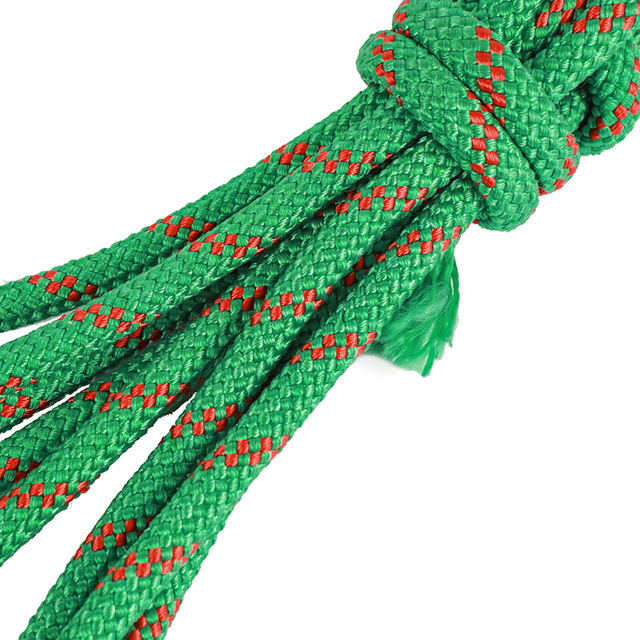
Deployment efficiency improves dramatically when fleets transition to synthetics. Steel wire usually demands mechanical assistance during operations. It frequently requires multiple deckhands to wrestle stiff, heavy lines onto bollards. This slows down port operations and increases physical fatigue among the crew.
Conversely, HMPE dramatically streamlines the mooring process. A reduced crew can handle synthetic lines quickly and safely. It glides over surfaces easily and bends without immense physical effort. You save crucial time during complex harbor maneuvers.
Injury reduction represents a major operational victory. Synthetics completely eliminate wire-rope-specific hazards. For instance, they eradicate "fishhooks". These are broken, rusted steel strands protruding from the rope body. Fishhooks easily puncture heavy leather gloves and cause severe hand lacerations. Furthermore, lightweight synthetics minimize heavy lifting injuries and chronic back strain among your deck crew.
Kinetic energy and snap-back behavior remain critical safety topics. Industry frameworks continuously evaluate synthetic rope parting dynamics. HMPE stores significantly less kinetic energy than nylon or steel under immense load.
If an HMPE rope parts, it recoils much differently than steel. The risk of lethal whiplash is mathematically lower because it lacks heavy mass. However, snap-back zones must still be strictly enforced. You cannot treat synthetic ropes as completely hazard-free. They still release dangerous stored energy upon catastrophic failure. Proper deck safety protocols remain non-negotiable.
Corrosion completely devastates steel wire over a multi-year deployment. Steel rusts and degrades internally where visual inspections often fail. You must apply heavy marine grease constantly. This requires dedicated environmental protection measures to prevent ocean contamination during application.
In contrast, HMPE is 100% hydrophobic. It repels water naturally and remains completely immune to saltwater corrosion. You never need to grease a synthetic line. However, it is highly susceptible to external abrasion. Rough fairleads or concrete bollards will shred unprotected synthetic fibers rapidly. You must manage abrasion proactively.
You must also account for the creep factor in HMPE. "Creep" defines an irreversible elongation under constant static load. Synthetic ropes slowly stretch at a molecular level when held under long-term tension. Modern coatings and specific fiber grades mitigate this exact phenomenon in offshore mooring. Upgrading to SK78 fibers dramatically reduces elongation rates compared to older synthetic materials.
Thermal and UV limitations also dictate specific deployment strategies. Steel withstands extreme heat effortlessly. It survives engine exhausts and tropical deck temperatures without structural changes. HMPE begins to lose structural integrity at prolonged high temperatures. It generally degrades quickly above 65°C (150°F). It also requires engineered UV-resistant jacketing to survive long-term sunlight exposure on deck.
Here is a detailed breakdown of environmental resilience between the two materials:
Environmental Factor | Steel Wire Rope | HMPE Synthetic Rope |
|---|---|---|
Saltwater Corrosion | High vulnerability; requires heavy, recurring lubrication. | 100% immune; completely hydrophobic material. |
External Abrasion | Highly resistant; handles rough bollards and fairleads well. | Vulnerable; requires engineered chafe gear and polished surfaces. |
High Temperatures | Unaffected by typical deck heat or engine exhausts. | Degrades structurally when exposed to heat above 65°C (150°F). |
UV Exposure | Completely unaffected by intense sunlight. | Requires protective outer jacketing to block radiation. |
Let us examine the financial reality behind this material shift. Specifying premium HMPE rope for offshore mooring requires a much higher upfront investment. Initial procurement (CAPEX) definitely exceeds standard galvanized steel wire. You are paying for advanced polymer extrusion and complex braided jackets.
However, lifecycle savings (OPEX) quickly justify the switch for dynamic vessels. You spend absolutely zero on heavy marine grease. You also completely eliminate the application labor costs associated with lubrication. Winches and deck machinery experience reduced mechanical wear because of the lower payload. Furthermore, faster turnaround times in port quickly save hourly operational costs. Tug assist times often drop when crews deploy lines rapidly.
Lifespan assumptions depend entirely on maintenance and deck hardware quality. Steel wire may last three to five years. This timeline heavily depends on your aggressive corrosion management. A well-maintained HMPE rope for offshore mooring can easily match or exceed this timeframe. It achieves superior longevity only if properly protected from abrasion and cross-hauling.
The following chart provides a simplified visual summary of cost distribution across a standard five-year operational lifecycle:
Cost Category | Steel Wire System | HMPE Mooring System |
|---|---|---|
Initial Purchase (CAPEX) | Moderate | High |
Lubrication & Greasing | High (Recurring) | Zero |
Machinery Wear & Tear | High | Low |
Deployment Labor Hours | High | Low |
Chafe Gear Replacements | Low | Moderate (Recurring) |
Switching to synthetics is never a simple plug-and-play process. You cannot simply spool HMPE onto old, unmodified steel-wire winches. You must conduct thorough deck hardware audits before execution.
Fairleads require professional polishing to a specific roughness average (Ra). Industry standards often recommend an Ra of 3.2 micrometers or smoother. Rough spots, rust scales, and old grooves will instantly shred synthetic jackets. Furthermore, winch drums may need significant structural reinforcement. They must handle the severe radial compression forces caused by synthetic ropes under heavy tension.
You must prioritize spooling under tension during the initial installation. Installation crews must spool HMPE under high back-tension. We typically recommend spooling at approximately 10% of the minimum breaking load. This strict requirement prevents "line burying". It stops the top layer from diving into lower layers during heavy deployment, which destroys the rope core.
Inspection protocol shifts represent another major transition hurdle. Steel relies heavily on Magnetic Rope Testing (MRT) for internal integrity checks. Synthetics require strict visual and tactile inspections. Crew members must look for fuzziness, jacket abrasions, and localized diameter reductions. You must also implement residual strength testing programs to predict retirement timelines accurately.
Use this sequential buyer's checklist to guide your procurement discussions and retrofitting strategy:
Request third-party DNV or ABS type approvals for the specific rope design and application.
Demand comprehensive elongation-to-break testing data directly from the manufacturer.
Audit all deck fairleads and schedule professional machining to achieve the required Ra smoothness.
Specify customized chafe protection engineered specifically for your vessel's unique fairlead geometry.
Confirm the exact fiber grade used in the core to ensure adequate creep resistance for your operating climate.
Verify the manufacturer's outer jacket design provides adequate UV blocking capabilities.
Steel wire remains a viable, low-CAPEX option today. It works exceptionally well for highly abrasive, static offshore environments. However, HMPE stands as the definitive choice for dynamic offshore mooring. It excels where handling speed, crew safety, and payload optimization remain your absolute top priorities.
Before executing a fleet-wide material transition, carefully assess your existing hardware. Request a custom lifecycle cost analysis from a qualified engineering specialist. You must schedule a comprehensive deck hardware compatibility audit to polish all contact surfaces. Train your deck crew on new tactile inspection methods and snap-back safety zones. Finally, enforce strict abrasion management protocols to protect your synthetic investment long-term.
A: Yes, but it requires extensive surface polishing to remove all rust and sharp burrs. You must also evaluate and potentially modify the winch drum flanges. They need structural reinforcement to safely handle the different radial compression pressures exerted by synthetic fibers under high tension.
A: It generally provides a comparable or significantly longer operational lifespan, often exceeding five years. It achieves this longevity only if you utilize proper chafe gear. You must meticulously protect the rope from localized friction points and manage UV exposure carefully.
A: It is completely immune to water, saltwater corrosion, and most marine chemicals. However, it requires engineered outer jackets. These specialized covers prevent long-term UV degradation and mitigate severe external abrasion during a multi-year offshore deployment.