
 English
Views: 0 Author: Site Editor Publish Time: 2026-07-11 Origin: Site


Modern offshore aquaculture faces severe, unpredictable operational risks. Farm managers constantly battle structural net fatigue. They also face aggressive predator breaches from marine animals like seals and sharks. These ongoing structural failures threaten local marine environments and overall farm viability. Traditional nylon and standard polyester nets struggle to survive in high-energy, deep-water zones. They degrade rapidly under constant dynamic loads and strong ocean currents. Intense ultraviolet sunlight breaks down their chemical bonds over time. This rapid degradation requires endless, highly labor-intensive maintenance routines. We must shift toward advanced material science to effectively secure large offshore pens. This article thoroughly explores Ultra-High Molecular Weight Polyethylene (UHMWPE). It now serves as the essential industry-standard upgrade for modern commercial fish farming. You will learn about its core performance metrics and long-term durability. We will examine its impressive environmental resilience against harsh marine conditions. Finally, you will discover practical implementation realities for protecting your offshore grid systems.
Offshore fish farming pushes infrastructure to its absolute physical limits. Legacy polymers simply cannot withstand these extreme marine environments. Nylon and polyester served the industry well in sheltered coastal waters. However, they fail rapidly when deployed in turbulent, high-energy offshore zones. Constant dynamic loads stretch these traditional fibers beyond their elastic limits. Saltwater penetrates the polymer matrix and accelerates chemical breakdown. Simultaneously, daily UV radiation causes severe photo-oxidation. This combination destroys the structural integrity of conventional nets in just a few short years.
Net failure causes consequences far beyond simple material replacement. A torn net often results in catastrophic inventory loss. Escaped fish create significant regulatory compliance risks for farm operators. Local governments impose strict penalties for genetic pollution of wild fish populations. Protecting your inventory requires a fundamental upgrade in containment materials. You need a barrier capable of resisting sudden storm surges and determined predator attacks.
Traditional materials also carry a massive biofouling burden. Nylon absorbs water readily. This moisture absorption creates an ideal surface for marine growth. Algae, mussels, and barnacles attach themselves quickly to the swollen fibers. This biofouling drastically restricts water flow through the pen. Oxygen levels drop, causing severe stress to the fish inside. Removing this growth requires frequent, aggressive in-situ cleaning. These harsh cleaning methods inevitably chafe and weaken traditional fibers. The cycle of fouling and cleaning constantly degrades the net.
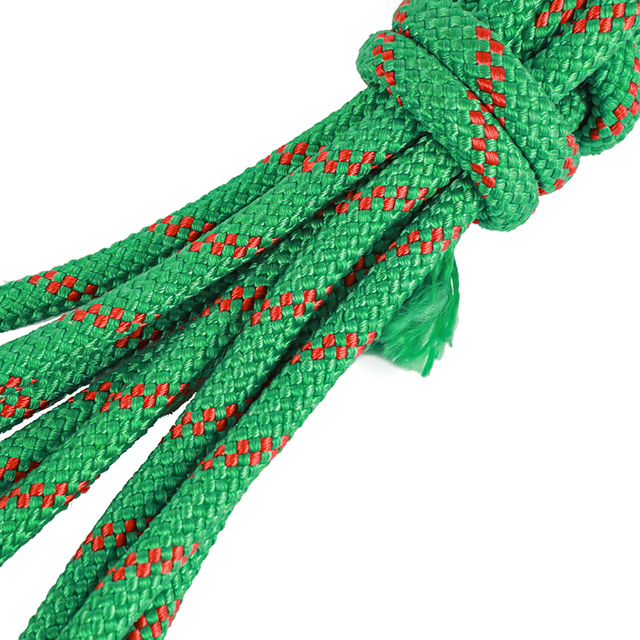
Upgrading your infrastructure requires understanding specific material capabilities. You must evaluate how the polymer behaves under continuous oceanic stress. Farm managers increasingly rely on UHMWPE fiber for aquaculture nets to solve legacy structural problems. This highly crystalline polymer delivers specific engineering advantages.
UHMWPE possesses exceptional ultimate tensile strength. The long molecular chains transfer load effectively across the polymer backbone. This incredible strength allows manufacturers to use much thinner twine diameters. Thinner twine significantly reduces the solid surface area of the net panel.
A thinner net profile fundamentally changes the hydrodynamic environment. Better water flow flushes waste out of the pen rapidly. Higher dissolved oxygen levels directly improve overall fish health. Furthermore, thinner twines generate far less hydrodynamic drag. Strong currents pass through the mesh rather than pushing against it. This drastically lowers the mechanical strain on your entire cage structure.
| Material Type | Relative Twine Diameter | Hydrodynamic Drag Rating | Water Flow Efficiency |
|---|---|---|---|
| Standard Nylon | 100% (Baseline) | High | Low |
| Standard Polyester | 110% | Very High | Very Low |
| High-Grade UHMWPE | 40% - 50% | Low | Excellent |
Direct sunlight ruthlessly destroys standard plastics. Photo-oxidation cleaves the polymer chains, causing brittleness and sudden failure. Marine environments amplify this damage through intense surface reflection. Modern ultra-high molecular weight polyethylene combats this scientific reality directly.
Manufacturers extrude modern UHMWPE alongside specialized UV inhibitors. These additives block radiation from penetrating the fiber core. The material maintains its structural integrity over many years of direct sunlight exposure. Extensive weathering data confirms its superior retention of tensile strength. You can deploy these nets at the ocean surface without fearing rapid solar degradation.
All polymers experience a phenomenon known as "creep". Creep defines how a material elongates under constant stress over time. Severe creep causes nets to sag loosely in the water. Loose netting compromises pen volume and tangles easily. High-grade UHMWPE features high crystallinity, which strongly mitigates structural creep. The mesh remains taut and strictly maintains its original dimensions.
Abrasion resistance is equally critical for offshore survival. Ocean predators constantly test the boundaries of fish pens. Seal claws and shark teeth easily shred nylon mesh. UHMWPE provides an incredibly tough, cut-resistant barrier. It easily withstands aggressive bite forces. It also resists mechanical chafing from rubbing against heavy structural sinker tubes.
A containment grid is only as strong as its weakest connection. Traditional farms often mix different materials across their infrastructure. This mixing creates unpredictable failure points during severe storms. Smart farm designs utilize continuous material systems.
You can achieve seamless integration by pairing your primary netting with UHMWPE fiber for Rope≠t applications. Using the same ultra-strong polymer for mooring lines eliminates weak links. Tension distributes evenly across the entire grid infrastructure. This unified approach maximizes the overall stability of your offshore installation.
Structural strength addresses only half of the offshore challenge. Daily operations require materials that actively resist environmental contamination. Advanced polymer properties dramatically streamline your routine maintenance tasks.
UHMWPE is fundamentally hydrophobic. It absorbs absolutely zero water. Traditional nylon absorbs up to 10% of its weight in water. Waterlogged nets become dangerously heavy and difficult to handle. Dry fibers ensure the net weight remains perfectly constant.
This zero-absorption trait provides excellent anti-fouling benefits. Marine organisms require a porous, moist surface to establish an initial grip. The slick, closed surface of this polymer resists initial algae and mussel adhesion. Your pens stay cleaner for much longer periods.
Biofouling eventually occurs in any nutrient-rich marine environment. However, cleaning UHMWPE nets requires significantly less effort. The incredibly smooth surface of the fiber prevents organisms from taking deep root. You can remove growth using much faster, less aggressive methods.
Automated robotic cleaners operate highly efficiently on these slick surfaces. High-pressure water jets blast away fouling without fraying the underlying twine. Manual cleaning crews spend less time scrubbing. This ease of cleaning prevents accidental damage during routine maintenance cycles.
Color plays a vital role in marine aquaculture. Specific colors help camouflage nets or reduce stress for the enclosed fish. Historically, netting required messy secondary dyeing processes. These topical treatments often weakened the base material. They also faded quickly under intense ocean sunlight.
Modern extrusion technology solves this problem completely. Facilities now utilize specialized UHMWPE fiber of Pre-dyed manufacturing capabilities. Color pigments mix directly into the polymer solution before extrusion. The color becomes an inseparable part of the molecular structure.
Pre-dyed technology delivers several crucial operational benefits. It entirely eliminates toxic secondary dyeing processes, significantly reducing environmental impact. It ensures absolute, long-lasting colorfastness despite constant saltwater exposure. Most importantly, it completely avoids harsh chemical treatments. The fiber retains its maximum original tensile strength from day one.
Procuring offshore infrastructure demands intense technical scrutiny. The global market contains numerous material suppliers of varying quality. You must evaluate manufacturers using strict, evidence-based criteria. A simple visual inspection cannot verify polymer integrity.
Not all high-strength polymers perform equally in the ocean. Some suppliers dilute their products to cut manufacturing corners. They blend standard polyethylene into their ultra-high molecular weight batches. These diluted blends masquerade as pure, premium-grade materials.
You must verify the exact fiber origin. Request detailed molecular weight specifications. Pure UHMWPE features a molecular weight numbering in the millions. Diluted blends will exhibit much lower numbers. Demand comprehensive transparency regarding the polymer resin source.
| Property | Nylon 6 | Standard HDPE | Pure UHMWPE |
|---|---|---|---|
| Specific Gravity | 1.14 (Sinks) | 0.95 (Floats) | 0.97 (Floats) |
| Water Absorption | High (up to 10%) | Very Low | Zero |
| Abrasion Resistance | Moderate | Good | Exceptional |
| UV Resistance (Untreated) | Poor | Moderate | Excellent |
The manufacturing technique matters just as much as the raw material. UHMWPE possesses a very low coefficient of friction. This slipperiness creates a unique engineering challenge. Traditional weaving knots can easily loosen and slip under tension. Knot slippage distorts the mesh size, creating potential escape routes for fish.
Evaluate exactly which weaving technique the manufacturer employs. Reputable suppliers typically utilize knotless Raschel techniques. Knotless construction intertwines the fibers permanently during knitting. If they use knotted construction, verify their stabilization methods. They must apply specialized polyurethane coatings to lock the knots firmly in place.
Never rely solely on marketing claims when protecting offshore assets. Always demand rigorous testing and compliance certifications. Reliable manufacturers maintain strict adherence to international quality standards.
Best Practices for Certification Review:
Common Mistakes to Avoid:
Transitioning to ultra-high molecular weight polymers represents a fundamental structural upgrade. It addresses the precise mechanical failures plaguing modern offshore farms. The material practically eliminates predator breaches and vastly improves hydrodynamic flow. Its inherent hydrophobic nature drastically simplifies your routine biofouling management.
Upgrading is ultimately a strategic risk-management decision. It protects your vulnerable marine inventory against catastrophic weather events. It ensures strict regulatory compliance by keeping your fish safely contained. The superior tensile strength provides unparalleled peace of mind during turbulent storm seasons.
Take immediate action to secure your offshore grid. First, audit your current frequency of structural repairs. Next, analyze how often biofouling critically restricts your pen oxygen levels. Finally, request custom structural specifications from verified, certified material suppliers. Demand rigorous proof of polymer purity before deploying your next offshore net.
A: No. UHMWPE is chemically inert. It remains highly resistant to saltwater, acids, and alkalis. The polymer does not lose its tensile strength or structural integrity purely from prolonged ocean submersion.
A: The fiber is inherently slippery due to a low friction coefficient. Traditional knots can loosen under wave tension. Reputable manufacturers solve this by utilizing knotless Raschel weaving technology. They also apply specialized polyurethane coatings to lock traditional knots securely in place.
A: UHMWPE has a specific gravity of roughly 0.97. This means the raw material actually floats. It requires proper sinker weighting. However, the overall hanging weight on your surface collar is significantly lower than water-logged nylon.
A: Yes. Because it features exceptional abrasion resistance, the material withstands automated cleaners easily. It handles high-pressure water cavitation and stiff brushing much better than standard commercial polymers.