
 English
Views: 0 Author: Site Editor Publish Time: 2026-07-07 Origin: Site


Tactical deployments force a difficult choice. Operators constantly balance mobility against survivability. Heavy armor severely limits response speed. It also causes rapid operator fatigue during intense active-shooter situations. When teams move slowly, operational risks multiply.
Enter Ultra-High Molecular Weight Polyethylene. The industry now relies on this advanced material to shed excess poundage in tactical gear. It promises a faster, safer, and more agile response without sacrificing defensive capability.
An UHMWPE ballistic shield offers a drastic weight reduction. However, teams must understand its specific structural mechanics before fully transitioning. You need to map out environmental limitations and exact threat-level capabilities. Making the switch requires careful analysis to ensure you never compromise core protection while pursuing a lighter loadout.
Let us talk about fatigue and deployment realities. Carrying twenty or more pounds of traditional shielding severely impacts operator biomechanics. The sheer weight shifts your center of gravity forward. This abnormal posture forces the lower back and shoulder muscles to overcompensate constantly. Heart rates spike much faster under this heavy physical load. Fine motor skills degrade rapidly during extended standoffs. A fatigued operator might struggle to manipulate their weapon properly. They could lose focus during critical decision-making moments when lives hang in the balance.
The weight-to-speed ratio plays a vital role here. Shield weight connects directly to breach speed and tactical agility. A heavy steel barrier slows down dynamic entry. Slower breaches give suspects more time to react. This lag ultimately compromises overall unit safety. You need equipment designed to move at the exact speed of human reflexes.
What does a successful transition to a lightweight Ballistic Shield look like? We define success using strict, measurable criteria. Upgrading materials should never compromise baseline safety standards.
Meeting these criteria ensures a true tactical upgrade rather than a risky operational compromise.
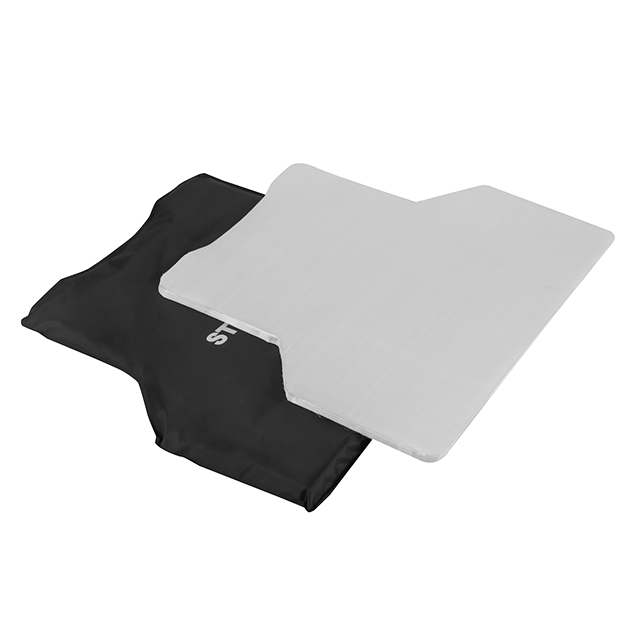
Understanding the molecular advantage reveals why this material dominates modern armor. Ultra-High Molecular Weight Polyethylene features incredibly long, high-density molecular chains. These extended chains transfer physical load effectively across the entire polymer backbone. We can frame this simply around tensile strength. The material is roughly fifteen times stronger than steel wire of the exact same weight. Incorporating UHMWPE fiber for Ballistic applications maximizes this extraordinary strength-to-weight ratio.
Energy dispersion looks completely different compared to legacy metals. Steel relies on sheer hardness. It shatters incoming projectiles or deflects them away. Deflection creates secondary fragmentation hazards for bystanders and teammates. Polyethylene acts more like an incredibly dense sponge. It absorbs kinetic energy rather than violently rejecting it.
The capture mechanism relies on intense friction and controlled melting. When a high-velocity rifle round strikes the shield, it spins rapidly. This rotational friction meets the polymer fibers. Localized fibers literally melt around the bullet instantaneously. The melting process traps the spinning round. Simultaneously, the layers of compressed polyethylene begin pulling apart. We call this process controlled delamination. Delamination safely disperses the remaining kinetic energy across the back-face signature. It catches the bullet much like a high-tech catcher's mitt.
Every defensive material carries unique strengths and inherent weaknesses. Analyzing these attributes helps teams make informed operational choices. We can break down the legacy benchmark, the transitional favorite, and the modern standard to see how they stack up.
Steel served as the tactical standard for decades. It remains the most basic form of hard armor available.
Aramid fibers bridged the gap between heavy steel plates and ultra-light polymers.
Pressed polyethylene currently leads the lightweight hard armor industry by a wide margin.
Here is a simple summary chart highlighting these distinct material differences:
| Material | Weight Profile | Spall Risk | Heat Resistance | Multi-Hit Capability |
|---|---|---|---|---|
| Steel | Extremely Heavy | High (Needs coating) | Excellent | Excellent |
| Aramid | Moderate | Low | Very Good | Good |
| UHMWPE | Ultra-Light | None | Poor (Degrades >180°F) | Excellent |
Matching specific features to real-world outcomes prevents dangerous field mismatches. Threat level mapping guides this entire procurement process effectively.
For handgun and submachine gun protection, agencies look at Level IIIA ratings. Pressed polymer offers ultra-thin, one-handed options here. A Level IIIA shield remains light enough for daily patrol officers. They can deploy it rapidly from a cruiser during sudden ambushes. It effectively stops 9mm, .44 Magnum, and 12-gauge slug impacts without compromising user mobility.
Rifle protection requires Level III or Level III+ ratings. You should frame pure polyethylene as the optimal choice for stopping intermediate rifle cartridges. It effortlessly catches 5.56x45mm (M193) and 7.62x51mm (M80) ball rounds. The massive weight savings at this threat level completely change how tactical teams operate.
Armor piercing protection jumps to Level IV. We must clarify expectations realistically here. Pure polyethylene cannot stop armor-piercing rounds alone. A hardened steel core or tungsten penetrator will slice right through the polymer layers. Defeating these rounds requires a ceramic strike face. The ceramic blunts and fractures the penetrator first. The polymer backing then catches the fragments. Adding ceramic alters the final weight calculation significantly.
You must also address thickness versus caliber realities. Stopping a 5.56 round requires a specific thickness of compressed material. Consequently, a pure polymer shield will look visibly bulkier than a steel equivalent. Operators must practice navigating narrow doorways with this thicker profile.
Finally, remember to evaluate hardware and viewports. Ballistic glass viewports add massive density. Handle configurations, LED lighting arrays, and heavy fasteners often add unexpected weight. Always calculate the fully assembled weight rather than relying solely on the raw plate weight.
Let us address the known environmental sensitivity directly to build trust. Ultra-High Molecular Weight Polyethylene has a specific heat weakness. The material can begin losing structural integrity at prolonged temperatures above 180°F (82°C). High heat softens the internal adhesives holding the compressed layers together. This softening effect diminishes the friction-melting capability needed to catch high-velocity rounds effectively.
Agencies must outline and enforce strict storage protocols. You cannot treat polymer armor like steel. Never store these shields in car trunks in desert climates during mid-summer. A vehicle interior baking in the Arizona sun can easily exceed safe temperature thresholds. Store the equipment in climate-controlled armories when not actively deployed. Keep them far away from direct space heaters or industrial radiators.
Understanding lifespan and warranty periods ensures safe continuous operation. Pressed polyethylene armor typically carries a standard five-to-ten-year shelf life. Over time, the internal adhesives dry out naturally. The layers may lose their optimal cohesive strength. You must factor this physical degradation timeline into your equipment rotation schedules. Unlike steel's near-infinite lifespan, polymers require routine structural inspections. Check for visible delamination, bubbling, or warping along the edges annually.
Let us summarize the final verdict. An advanced polymer shield is not a magical zero-weight solution. It does have a distinct physical thickness and clear environmental limitations. However, it remains the most scientifically advanced tool available today. It safely prioritizes operator endurance and vital mobility against rifle threats. You reduce physical fatigue while maintaining superior multi-hit ballistic integrity.
Take immediate action by auditing your current threat environment. Assess the specific calibers your operators realistically face on patrol. Request a Test and Evaluation (T&E) unit to feel the biomechanical difference firsthand. Contact a qualified armor specialist to discuss custom dimensions, hardware additions, and precise NIJ ratings tailored exactly to your deployment needs.
A: Stopping a standard 5.56x45mm round generally requires a pure polyethylene plate thickness between 0.8 to 1.2 inches. The exact measurement depends heavily on the specific manufacturing and pressing techniques. High-pressure compression yields slightly thinner plates, but polymer will always remain thicker than steel counterparts for rifle-rated protection.
A: No, pure polyethylene cannot stop armor-piercing rounds by itself. Defeating hardened penetrators requires a hard ceramic composite strike face. The ceramic shatters the bullet's copper jacket and blunts the hard steel or tungsten core. The polymer backing then catches the resulting fragments through controlled delamination.
A: Yes. Pressed polymer armor typically carries a 5 to 10-year warranty. The adhesives binding the ultra-high molecular weight fibers slowly degrade over time, especially when exposed to heat or UV light. Regular inspection for warping or delamination becomes critical after five years of active field use.
A: Pure polyethylene is significantly lighter than ceramic. However, ceramic is strictly required to defeat Level IV armor-piercing threats. If your threat environment dictates Level III rifle protection, a pure polymer shield provides the lightest possible solution. Moving to ceramic composites adds necessary density but increases overall weight.