
 English
Views: 0 Author: Site Editor Publish Time: 2026-09-01 Origin: Site


Selecting protective gear involves a harsh operational reality and a fundamental trade-off for any organization. Maximizing ballistic protection inherently increases the overall weight and thermal burden placed on the user. Consequently, this heavy load can severely degrade operational mobility and compromise situational awareness in high-stress environments. The compliance problem remains incredibly common across law enforcement and tactical units. Improperly sized or overly restrictive gear often leads directly to non-compliance, prompting frustrated users to leave life-saving equipment behind. Furthermore, poorly fitted vests accelerate premature physical fatigue during long, demanding shifts. This article provides a transparent, evidence-based framework to help you navigate these complex choices. We will evaluate different coverage options, specific cut profiles, and strict sizing standards. You will learn how to balance essential protection with the need to move rapidly and efficiently. Ultimately, our goal is to ensure both tactical effectiveness and comfortable daily wearability for every operator in the field.
More is not always better: Oversized armor restricts dynamic movement, impedes weapon shouldering, and accelerates heat stress.
Mission dictates coverage: Minimalist plate carriers prioritize mobility for high-intensity, short-duration tasks, while full-coverage ballistic vests suit prolonged static or patrol environments.
Fit is a safety feature: Correct sizing (measuring sternal notch to navel) ensures vital organ coverage without compromising the ability to sit, drive, or bend.
Comfort is measurable: Modern procurement relies on standardized metrics for physiological comfort, including thermal resistance and moisture vapor transmission.
Operators face intense physical demands during long, unpredictable shifts. Insulating ballistic materials inevitably trap core body heat against your torso. This creates a severe thermal burden. We measure this burden using specific physiological and sensorial comfort metrics established by testing laboratories. Thermal resistance determines how fast internal heat escapes outward. Moisture vapor transmission rates indicate the breathability of the carrier materials. When your gear traps heat, your core body temperature spikes rapidly. You sweat heavily, which drastically increases dangerous dehydration risks during summer deployments.
Excess weight carries significant, compounding mobility penalties. When selecting Body Armor, you must understand how extra pounds change human biomechanics. Heavy protective plates increase your daily baseline caloric expenditure. They accelerate fatigue rates during extended tactical deployments and prolonged foot patrols. Joint stress multiplies exponentially with every step you take. Extra pounds compress your spinal discs in the lumbar region. They also strain your patellar tendons and knee joints over time.
We frequently observe a distinct "armored bubble" effect in tactical users. Overly rigid coverage drastically reduces your peripheral mobility. It restricts your ability to twist at the waist or look down at your duty belt. This bulky profile actively alters your natural walking gait. A restrictive vest slows your reaction times when facing sudden, dynamic threats. You lose the ability to perform explosive physical movements. You must carefully balance these negative biomechanical impacts when selecting your final protective gear loadout.
You must evaluate your actual operational environment before choosing a protective solution. We generally divide these options into full-coverage vests and minimalist plate carriers. Each category serves very specific mission profiles and mitigates different threat vectors.
Full-coverage options typically combine soft aramid panels with hard plates. They offer the maximum possible surface area protection. This coverage wraps around your torso, protects your flanks, and sometimes includes neck or groin attachments. Patrol officers often prefer a comprehensive ballistic vest for daily use. They face unpredictable, multi-angle threat environments where attacks can come from any direction. However, you must accept certain operational drawbacks. These robust vests cause high heat retention. Their extreme bulk can also impede rapid ingress and egress from tight vehicle cabins.
Minimalist plate carriers rely strictly on hard armor plates housed in lightweight nylon. They provide superior ventilation and remain incredibly lightweight on your shoulders. You retain completely unhindered arm and torso rotation. This allows for aggressive tactical movement and incredibly fast weapon manipulation. The primary downside remains highly noticeable. A minimalist setup leaves your flanks and lower abdomen completely exposed. You must strictly adhere to proper tactical positioning during engagements. You must keep your front facing the primary threat at all times.
Use a strict decision framework to map your coverage choice to your specific environment. Civilian defense relies on concealment and rapid mobility. Law enforcement requires full torso wrap to survive unpredictable street encounters. High-threat tactical units demand plate carriers to sprint, breach, and clear rooms without exhausting themselves.
Operational Feature | Full-Coverage Vests | Minimalist Plate Carriers |
|---|---|---|
Primary Component Material | Soft aramid/PE panels + Hard plates | Hard plates only |
Total Coverage Area | Torso, flanks, upper chest, lower back | Vital organs (cardiopulmonary triangle) only |
Overall Mobility Level | Moderate to Low | High to Extreme |
Physiological Thermal Burden | High (restricts evaporation) | Low (allows side ventilation) |
Ideal Mission Environment | Routine patrol, unpredictable multi-angle threats | Direct action raids, high-intensity short tasks |
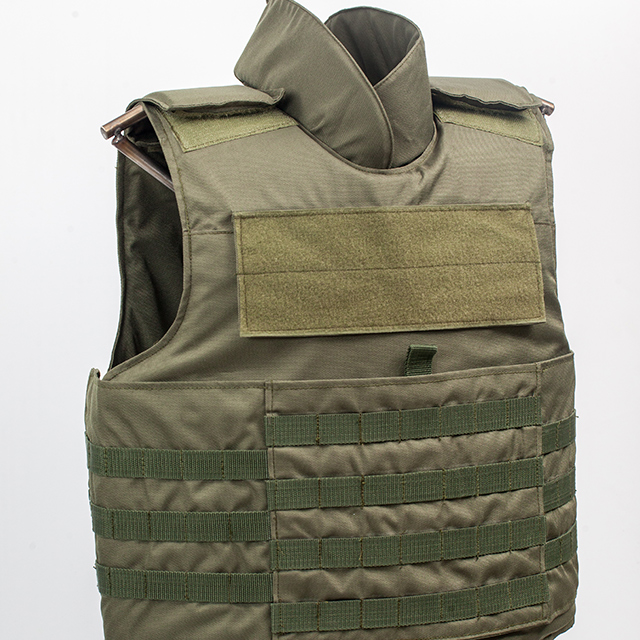
The physical shape of your hard plates directly dictates your upper body mobility. You can choose from several distinct geometrical profiles. Each specific cut interacts differently with your unique body mechanics and chosen weapons platform.
SAPI / ESAPI Cut: The Small Arms Protective Insert remains the standard military issue profile. It offers a highly balanced ratio of vital coverage and functional mobility. We recommend this traditional cut for general-purpose tactical use. It covers the lungs and heart while allowing moderate arm movement.
Shooter’s Cut: Engineers designed this specialized profile for dynamic shooting environments. It features exaggerated, deep top angles. These steep angles allow deep shouldering of modern rifles. You gain improved arm extension for aggressive, modern weapon manipulation techniques.
Swimmer’s Cut: This radical cut provides maximum possible shoulder clearance. Designers originally created it for specialized maritime operations. It remains ideal for tactical users requiring extreme upper-body articulation. If you climb ladders frequently or drive specialized vehicles, you should strongly consider this profile.
Your chosen plate cut heavily impacts all subsequent gear integration. A bulky, square plate inherently interferes with chest rigs and padded duty belts. It can easily snag on complex rifle sling setups during transitions. You should always test your entire loadout together as a unified system. Make sure your plate profile allows completely unhindered access to magazines, radios, and individual first aid kits.
Correct measurement prevents catastrophic field failures and daily discomfort. You must first understand and identify the strike face zone. Hard plates exist specifically to protect your cardiopulmonary triangle. This vital anatomical zone includes your heart, your lungs, and your great blood vessels. They do not exist to cover your entire torso down to your waistline.
Follow these distinct steps to measure yourself properly for a functional fit:
Locate your sternal notch: Find the soft, U-shaped indentation at the very top of your breastbone. This serves as your primary starting vertical point.
Measure the vertical length: Run a flexible soft tape measure down from the sternal notch directly to your navel. Subtract one full inch from this exact number. This final number provides your ideal plate length.
Identify the width boundary: Locate your nipples to use as horizontal reference points. Measure straight across the chest from nipple to nipple.
Confirm the horizontal width: Ensure this specific measurement provides adequate forward-facing protection. It must not hinder your arm crossover when punching out a handgun into a firing stance.
Beware the severe operational risk of over-sizing your gear. If your plate sits too low or measures too long, it violently pushes up into your throat. This choking effect happens immediately when you sit down or drive a standard patrol vehicle. Soft armor requires exact chest and girth measurements because the panels wrap entirely around your torso. In contrast, hard plates follow standardized incremental sizing. You typically choose between standard 10x12 or 11x14 dimensions based on the vertical and horizontal steps outlined above.
Modern protective procurement demands strict adherence to proven performance standards. You cannot judge protective gear by external appearance or marketing claims alone. Regulatory bodies like the National Institute of Justice (NIJ) define acceptable coverage areas. They also mandate strict backface deformation limits. When a projectile strikes a panel, the internal material bows inward against your body. The NIJ ensures this inward deformation remains survivable, typically capping it at 44 millimeters.
Moisture management directly dictates daily operational comfort. You should always evaluate the inner lining of any protective garment before purchasing. Look specifically for 3D spacer mesh construction. Seek out advanced antimicrobial wicking layers. These engineered textiles actively pull sweat away from your bare skin. They drastically improve sustained wearability in hot, humid climates by allowing evaporative cooling.
Use a strict, standardized procurement checklist when shortlisting different manufacturers. Reject companies selling generic "T-shirt sizes" without providing detailed measurement matrices. Insist on exact sizing charts mapped to human anatomy. Verify their long-term warranty terms for both the carrier and the ballistic panels. Demand to see independently verified ergonomic testing data rather than relying solely on ballistic failure limits.
The optimal protective gear always fits seamlessly into your specific daily risk profile. It must match your unique physical dimensions and adapt to your operational environment. Finding this perfect balance requires prioritizing the protection-to-mobility ratio over merely chasing the highest available threat level. Oversized gear restricts your movement, traps dangerous body heat, and ultimately discourages daily compliance. You must view mobility as a vital component of your overall survival strategy. Fast, unhindered movement keeps you alive during dynamic threats. We strongly advise against buying based solely on maximum coverage area. Instead, measure yourself accurately, evaluate your mission requirements, and select a plate cut that allows you to work efficiently. We encourage you to consult a comprehensive sizing guide, utilize a product comparison matrix, or schedule a professional fitment consultation to finalize your purchase with confidence.
A: No. Oversizing compromises mobility, pushes armor into the throat when seated, and restricts access to belt-mounted equipment. It also adds unnecessary weight, which accelerates physical fatigue and degrades your operational readiness over a long shift.
A: The bottom edge should rest just above the duty belt or navel, allowing the user to sit without the vest buckling or shifting upward. If it pushes into your chin or throat, your front panel is significantly too long.
A: Soft armor will naturally conform to the body over time (breaking in). Proper storage (flat, not hung by straps) maintains the panel's structural integrity and intended fit. Never fold or tightly roll your panels to artificially soften them.
A: Physiological refers to heat and moisture management (breathability), while sensorial refers to the physical feel against the body (chafing, weight distribution, ergonomics). Both metrics drastically impact whether an operator will willingly wear their gear daily.